1. Personal Hygiene
All catering staff must follow these guidelines during every shift to protect consumers and maintain professional food safety standards.
Catering staff must follow these hygiene practices:
- ✓ Wash hands with soap for at least 20 seconds before handling food
- ✓ Wash hands after restroom, touching face/hair, or handling raw food
- ✓ Dry hands using disposable paper towels
- ✓ Wear clean uniforms, aprons, and hairnets in food preparation areas
- ✓ Keep fingernails short and clean. Avoid jewelry when preparing food
- ! Report illness, wounds, or infections to supervisor immediately
- ✓ Use disposable gloves when handling ready-to-eat food

Handwashing Procedure

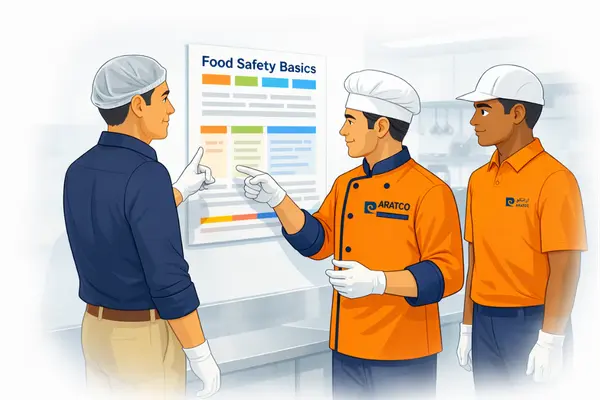
🌡️ 2. Food Safety Basics — Temperature Control
THE DANGER ZONE: 5°C to 60°C
Bacteria multiply rapidly in this temperature range. Keep cold food below 5°C and hot food above 60°C.
FIFO Storage Rules:
- Store raw meat on lower refrigerator shelves
- Ready-to-eat foods on upper shelves
- Label and date all stored items
- Use older stock first (First-In-First-Out)
Color-Coded Chopping Boards
Prevent cross-contamination by strictly using the correct board:

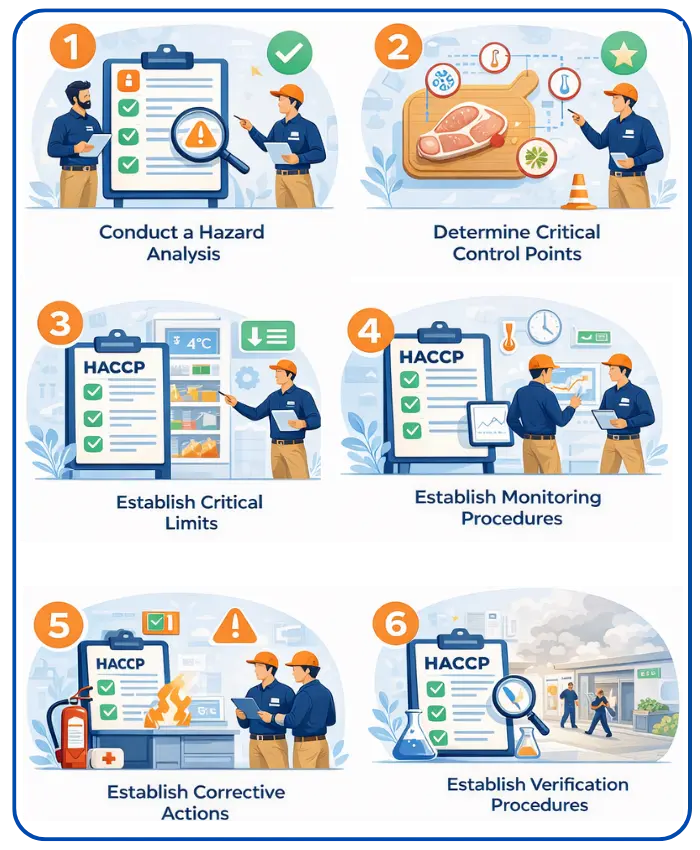
4. The 7 HACCP Principles
HACCP is a food safety management system used to identify and control food safety hazards.
1. Hazard Analysis
Identify bacteria, chemicals, or allergens
2. Critical Control Points
Points where hazards can be controlled
3. Critical Limits
Establish safe limits e.g. cooking temps
4. Monitoring
Regularly check food temperatures
5. Corrective Actions
Reheat or discard if limits not met
6. Verification
Ensure HACCP system works via inspections
7. Record Keeping
Maintain temperature logs and cleaning records
⚠️ 5. Allergen Management
Avoid cross-contact. Identify dishes containing allergens.
♻️ 6. Waste Management & Emergencies
- Dispose of expired or spoiled food immediately
- Separate food waste from general waste
- Remove trash regularly to prevent odors and pests
- Securely close trash bags before disposal
- Clean waste containers regularly to prevent contamination
⚡ Power Outage
- Inform supervisor immediately
- Keep fridge/freezer doors closed
- Discard food above safe temp limits
🔬 Contamination & Audits
- Discard any contaminated food
- Cooperate with inspectors
- Provide temperature logs when requested

📋 Daily Food Safety Checklist
Supervisors and chefs must verify the following items at the start and end of every shift: